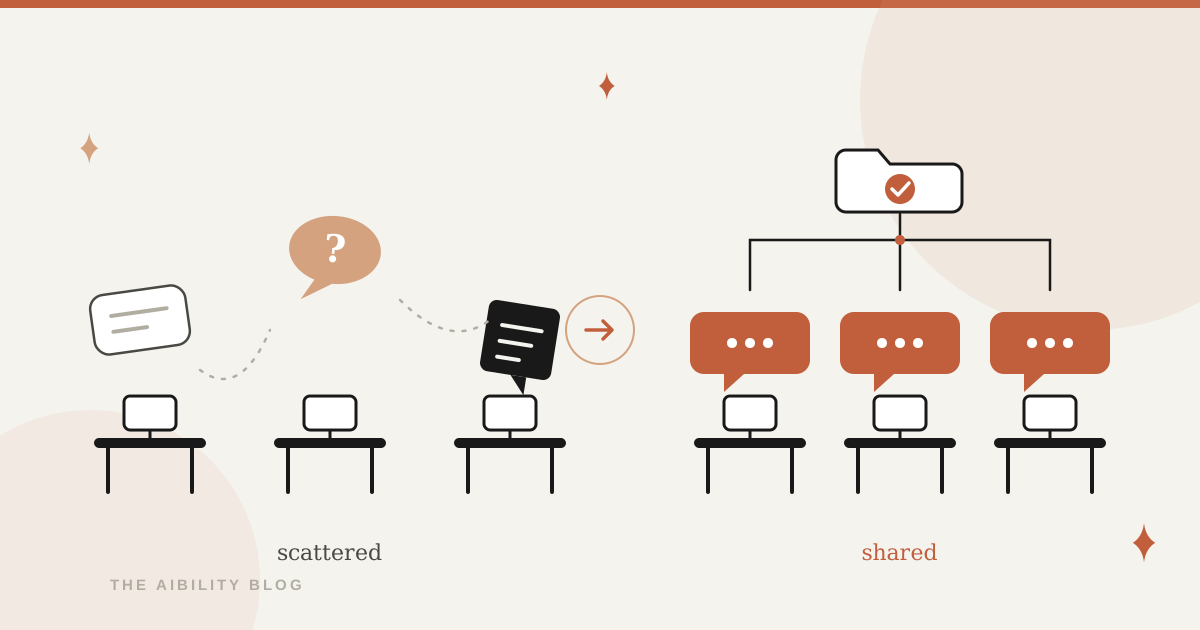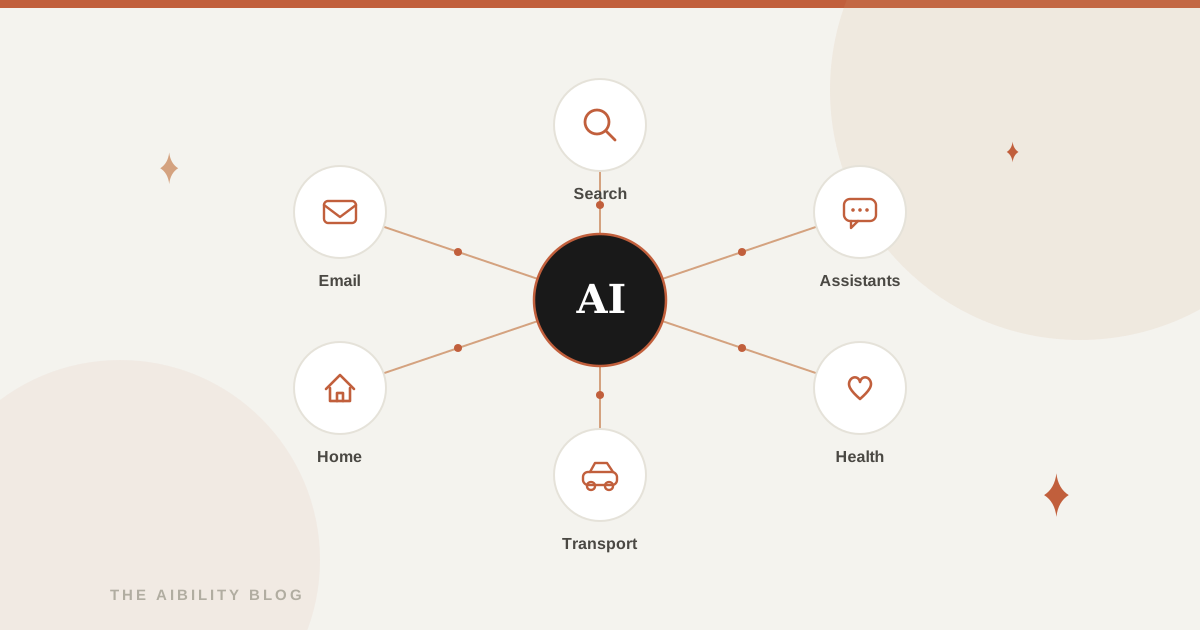
When I first started using AI for software development I was highly sceptical. It answered questions, helped reinforce ideas and let me learn concepts in ways I could apply to the features or bugs I was working on — but it still took huge manual effort to bring everything together. That changed rapidly with the arrival of agentic development.
At first, agentic development was a tool that lived in your IDE or terminal. You could point it at a file and, rather than navigating off to an external app or website, ask it to apply the ideas you were considering directly in your solution. This changed everything — suddenly you were in an environment that gave you the knowledge of Google with the powers of an engineer.
But this was only the beginning of the journey. The next six months changed how I write code and develop solutions, and freed me up to work on tooling, polish architecture and think about how to automate the repetitive tasks I do as a developer — making myself even more productive.
I was a single developer working like a team of ten.
Agents
A development team can be anything from a single person who knows a bit of everything — front end and user experience, databases, connectivity — to hundreds of specialists in architecture, a testing framework, code quality or user experience. What if I could harness the experience and skills of all those different roles as I developed my code? I had an idea: I created agent profiles that I could ask my AI tool to take on as I worked in different areas of the system.
Let me give you an example. When I'm working on UI, the agent takes the role of a UI developer — someone creative, who thinks of the user and makes sure the colour scheme and consistency are applied throughout the front end. That's in stark contrast to an architect, someone you want focused on how the system fits together and how all the moving parts combine into a working whole.
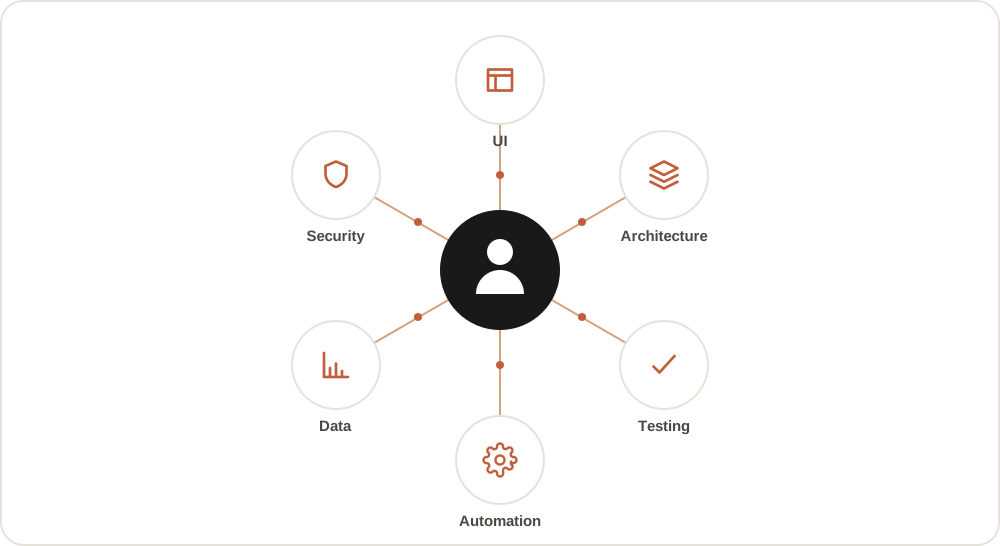
Now I had a team. The UI developer could work on a front-end feature while the architect made decisions on observability and telemetry — the two pieces of work having no impact on each other.
Skills & workflows
As I tried these ideas out, I ran into the big issue with AI: every time I start a new conversation, all the knowledge is lost. Imagine a human team of developers who, every time you need something new built, have to learn everything again — we all know how much pain onboarding can be!
This was especially true for the jobs we did over and over — creating a new table in our database, or extending the application with a new page. I don't want the team going away to relearn everything for something we've done a hundred times already. So I asked: how can I give them the information they need, when they need it, so they can perform an action without burning through tokens to figure out the code each time?
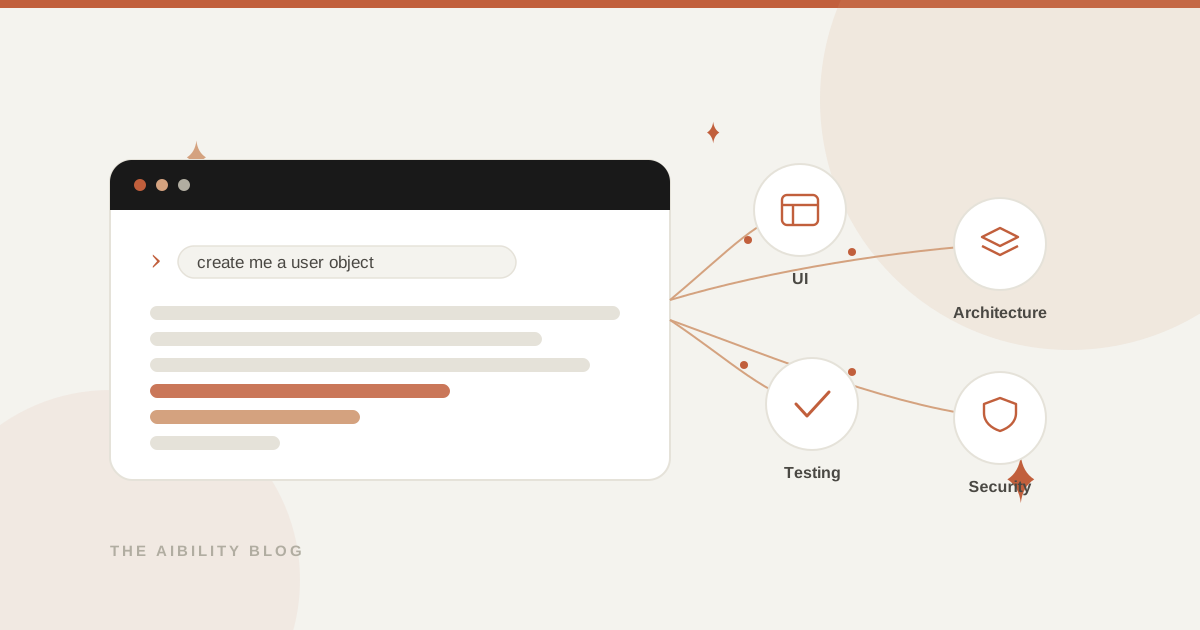
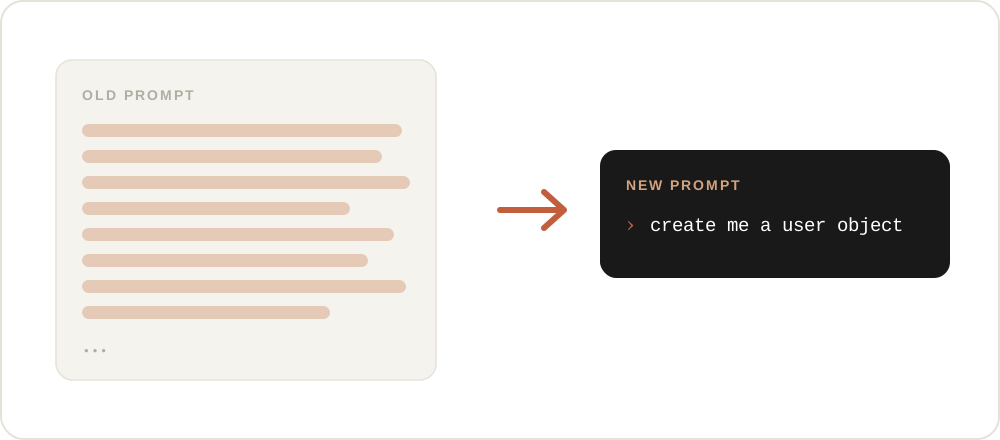
So I created skills and workflows. A skill is a repetitive task; a workflow is a chaining together of those repetitive tasks. Picture the prompt you'd normally write just to add something as ordinary as a new user to an application:
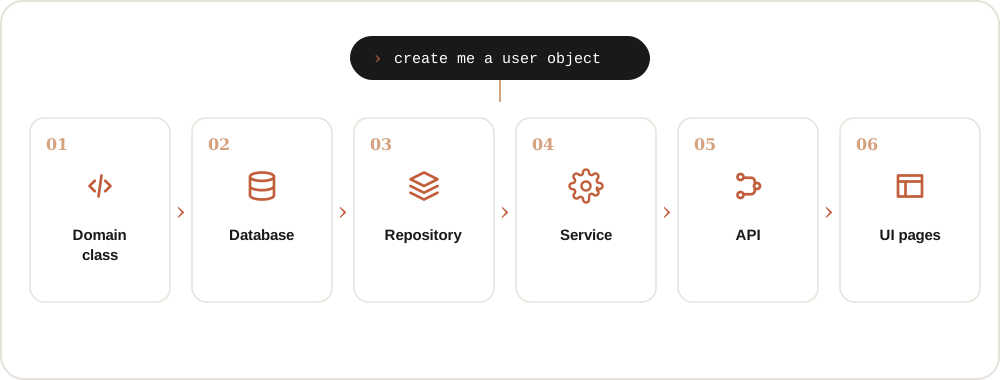
Old prompt “We would like a new user object in our application. This requires creating a domain class, a database object, a repository (to hold the data in memory), a service (for caching and validation), an API controller (to surface the user for the front end), and UI elements such as a consolidated list, edit and view pages aligning with our existing design …”
And that prompt doesn't even cover half of what we need to get this into production — but you can already see the complexity. Now imagine doing that for every object in your system: users, roles, security policies, departments, products, customers, and on it goes.
What if we could just say “create me a user object” and the agent already knew every step needed to do it?
How we can help you
At AIbility we aim to start you on a journey of applying these concepts and tools to enhance what you can do. Whether it's giving you the confidence to take the reins and explore how AI can work for your business, or leaving the tooling to us to solve your day-to-day problems, we believe the right approach leads to better outcomes and greater productivity for you too.
If that sounds like the kind of help your team could use, book a free call.