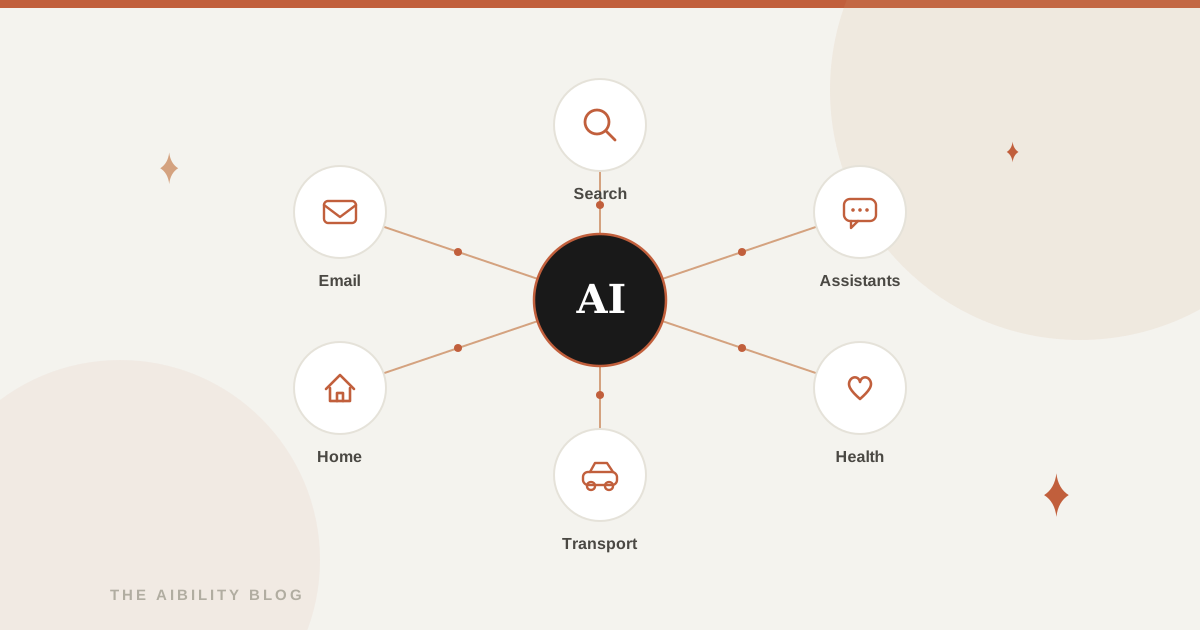
Artificial intelligence is the new internet. It's everywhere you look — something we interact with every day, knowingly or not — and it's all anyone seems to talk about. But what actually is it?
The honest answer: it isn't true artificial intelligence, the kind you see in the films. But it is artificial, and it can be intelligent — and learning how to get the most out of that is where the fun starts. Let's begin with the basics.
So, what is it really?
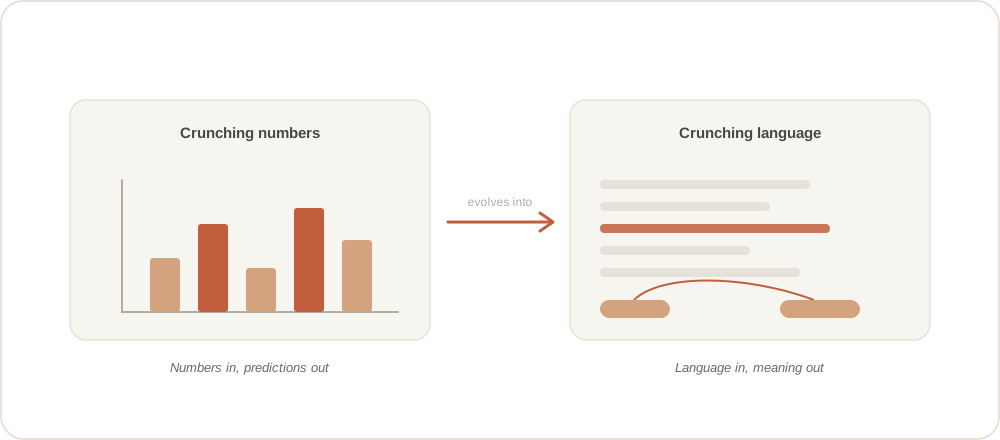
AI is the next iteration of machine learning: the ability for machines to crunch huge sets of data and make predictions from it. For years that was done purely with numbers — often by mathematicians or statisticians applying known formulas and charts to a dataset with well-defined measures.
That has changed. You can now crunch enormous volumes of text too — drawing out the relationships between words and explaining things in language that feels natural to whoever's reading. That shift is where large language models (LLMs) have really taken off.
What can I do with it?
The world really is your oyster — well, until it isn't, but let's stay on the positives for now. In theory, you could manufacture a car with it.
What does manufacturing a car actually entail? A set of instructions for what a car looks like and the parts to build it. An analysis of the features that make a car sell. An understanding of who'd buy it, and for how much. Chain those thoughts together for an AI assistant and it'll happily build you a car.
The catch is in everything you didn't say. Does the engine turn on? Were the instructions detailed enough to know the car has to pass road-safety tests before it can be sold? Did anyone mention that a customer needs a way to pay for it before they can drive it home? What you can do with the technology is entirely down to what you feed it — and that comes down to what you define up front.
Are there drawbacks?
Of course. Take that car again. If you're too literal, your new assistant does exactly what was asked: you get a car, every safety check is done, and its excited new owner drives it home. But what if there was a flaw in the original instruction, or the details weren't clear enough — and your customer is now riding home on a quad bike? Well, at least it has four wheels!
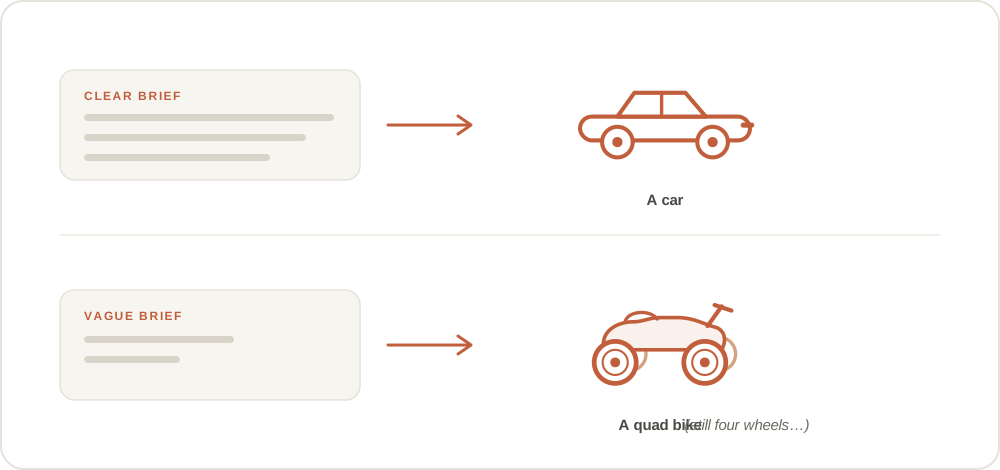
AI has a tendency to be too literal, or to hallucinate when it doesn't know something or has to make a call on unclear direction. At least us worthless humans still have some relevance after all.
So should I just not bother with it?
That depends on what you're like, and how much you enjoy exploring. For me, this technology has been a huge productivity boost — like having a team of juniors who are each very good at a specific task. I get to focus on what those tasks mean and what they produce, rather than sweating every detail of the implementation.
A tenfold boost in outcome beats a twofold boost in correctness.
And even when it gets something wrong, I just refine my instructions so I don't hit the same wall twice. It has taken time, effort and a lot of direction to understand what it's capable of and what I actually want from it — and honestly, that's been my favourite part.
Well, until the day AI becomes sentient and decides it's the boss!
How we can help you
Getting the most from AI is less about the technology and more about knowing what to ask of it — being clear, up front, about what "good" looks like. That's exactly where we come in. At AIbility we help you find where AI will pay off in your business, set it up safely, and get your team confident enough to direct it well.
If you're curious where to start, get in touch — the first call is free, and there's no jargon.