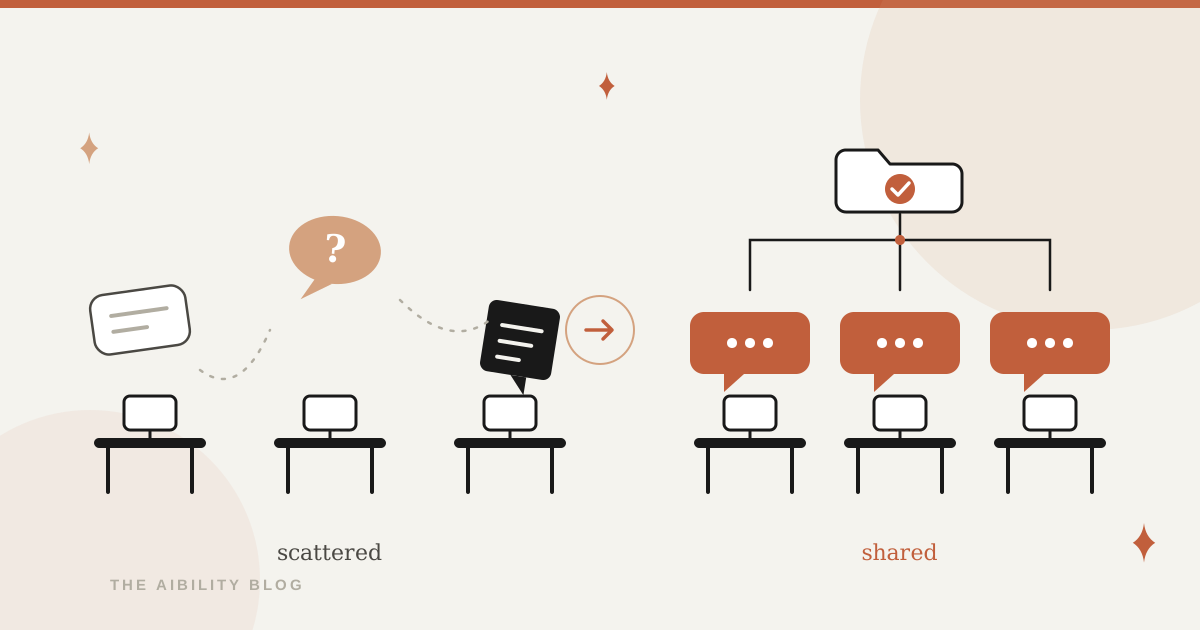
See if this sounds familiar. Someone in the office uses ChatGPT to tidy up their emails. Someone else has a Copilot trial nobody quite remembers signing up for. A third swears by Claude for writing reports, on a personal account, pasting in whatever they need to get the job done.
None of it is wrong, exactly. People are trying to get through the week. But nobody has agreed what goes in, who checks what comes out, or where the customer details pasted in last Tuesday have ended up. Two people doing the same job get two different results. And the useful tricks one person has worked out stay in their head.
Meanwhile, you have a nagging feeling that AI could take hours off the week — the quotes, the reports, the monthly pack — but no clear idea where to start, or how to do it without creating a new risk.
That gap, between people using AI and a business using AI, is what AI enablement closes.
What is AI enablement?
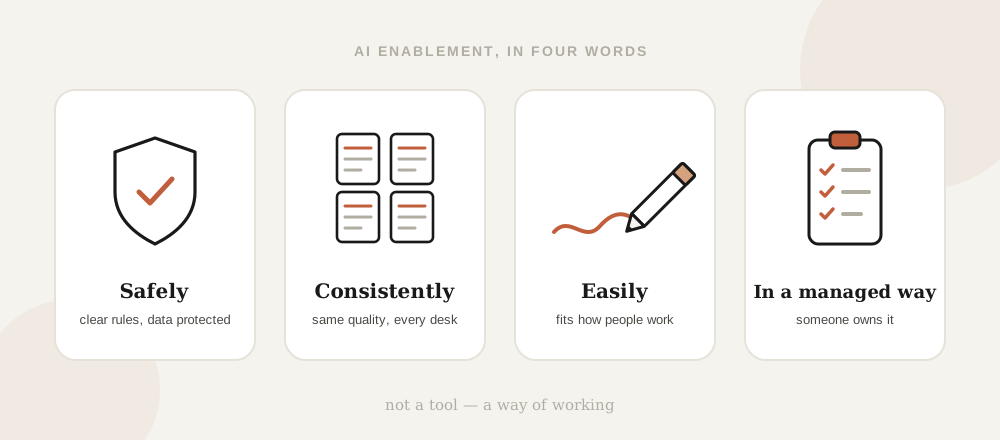
AI enablement is getting AI working across your whole team — safely, consistently, easily and in a managed way. It's less about which tool you buy, and more about how it's set up, what it's used for, and whether your people are confident using it on real work.
Each of those four words is doing a job.
Safely. Guardrails from day one: what goes in, who checks what comes out, and your data kept under your control. Personal accounts don't come with the controls a business plan does, and if customer or staff details go in, UK GDPR still applies.
Consistently. One way of working across the team. Shared tools and shared instructions, not everyone on their own account with their own habits.
Easily. Plain English, set up for you, and built around the work you already do. If it needs a manual, it won't get used.
In a managed way. A clear plan, a sensible pace and everything written down. AI becomes something the business runs, not something that happens to it.
The gap between people using AI and a business using AI is what enablement closes.
An AI enablement consultancy does that setting up, training and building alongside you, then hands it over. That's the work we do — there's more detail on our AI enablement page.
What AI enablement isn't
It helps to clear up three things it gets mistaken for.
It isn't buying a licence. A business subscription is a good start, but a tool with no guardrails or shared instructions just moves the same problem onto a company invoice.
It isn't a software project. You shouldn't end up needing a supplier every time you want to change how something works. If it's built well, your team can adjust it themselves.
It isn't about replacing people. The aim is to take the repetitive work off them. Their judgement stays in the loop: a person checks what AI produces before it goes anywhere that matters.
Where it tends to pay off first
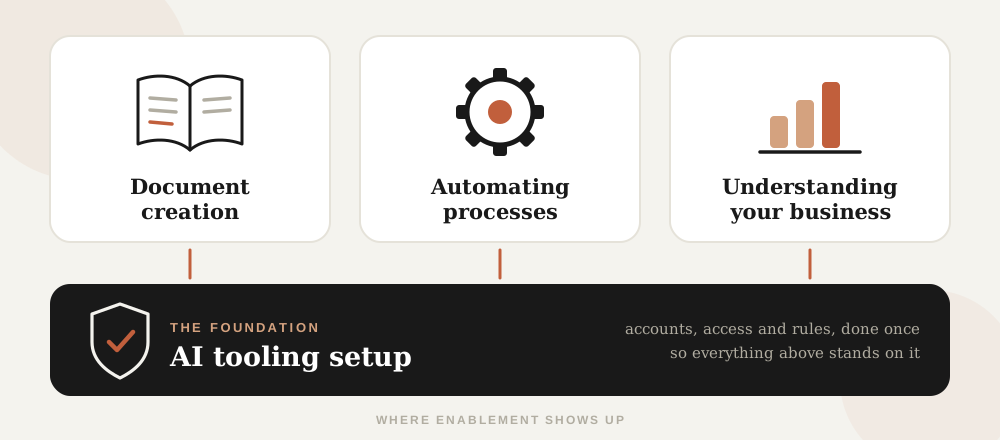
Every business is different, but the work AI helps with most usually falls into four areas.
Document creation. Proposals, quotes, reports, letters and briefs, drafted in minutes from your own templates and notes. In your voice, and checked by your people.
Automating processes. The repetitive jobs that eat the week: rekeying data, chasing information, sorting the inbox, preparing the same pack every month. More on that under back-office automation.
Understanding your business. Clear answers from the information you already have. Spreadsheets, systems and documents brought together, so you can see what's really going on — see reporting and data analysis.
AI tooling setup. The right tools, set up properly for the whole team: accounts, access, connections to your systems, and the guardrails that keep your data safe. This one sits underneath the other three. (For the technically minded, connecting AI to other software is often done through MCP, an open standard for exactly that.)
How AI enablement works in practice
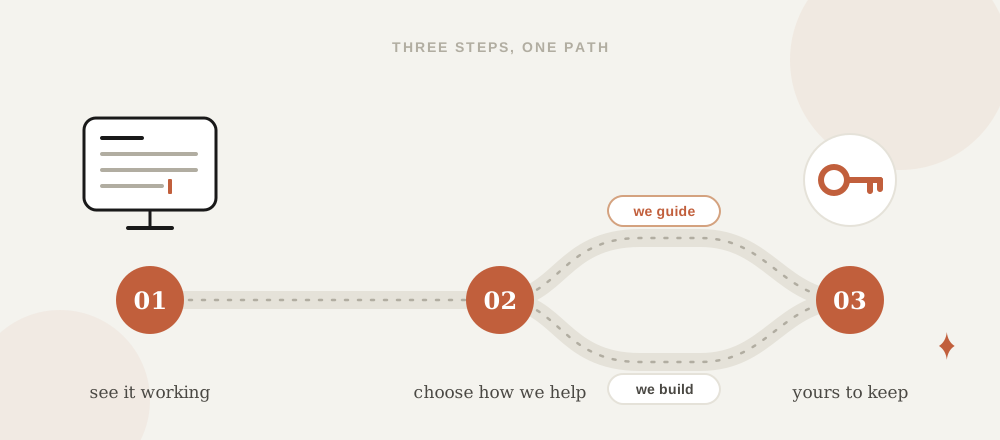
There's no single right way to do this, but here's how we approach it, in three steps. The full version is on our How we work page.
01 — See what AI can do, for you. Most people have tried a chatbot. Very few have seen AI do a real job from their own working week. So that's where we start: a demonstration and setup tailored to your organisation — your kind of documents, your processes, the questions you ask of your own numbers. It's built on realistic sample material, so you don't have to hand over anything sensitive to see it working. And the tools are set up properly for your team from the start.
02 — Choose how we help. Once you've seen what's possible, you decide. Some teams want to learn to do it themselves: hands-on training built around real tasks, playbooks they keep, and help building and testing their own tools. Others would rather we worked directly on one area of the business, agreed and priced up front, tested on your kind of material before it goes near the real thing. Most land somewhere in between, and you can change your mind as you go.
03 — Yours to keep. Whatever gets built, your team owns. Working tools, plain-English guides, and the know-how to change them when the business changes. We stay on hand if you want us, but nothing depends on us. That's the point.
Is AI enablement right for us?
Whether you run an office team buried in admin, a warehouse rekeying orders between systems, a marketing or branding agency writing the same kinds of briefs every week, an independent business where the paperwork happens after closing, or a lab team writing up results, the details change. The questions rarely do.
It's likely to be a good fit if:
- some of your team already use AI, and you'd like it done properly;
- you can name jobs that eat hours every week or every month;
- you'd rather your own people owned it than relied on an outside supplier for good.
It's probably not the right time if nobody can point to a task that takes too long — start by finding that, not with AI. And it won't work if the plan is to switch a tool on and leave it; enablement only pays off when people use it.
One honest caveat: AI isn't the answer to everything. Some jobs are better fixed with a clearer process or a better spreadsheet, and when that's the case, we'll say so.
Three things you can do this week
You don't need anyone's help to make a start.
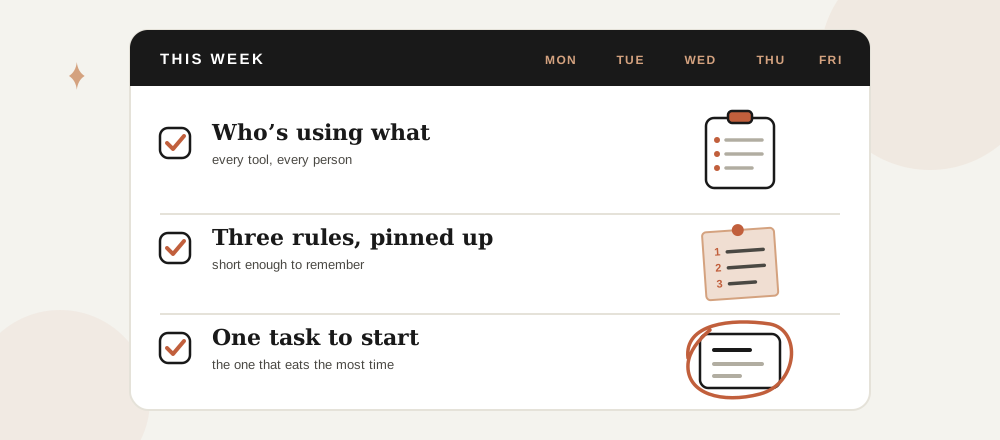
- Find out who's using what. No blame, just a list: which tools, on which accounts, for which jobs. It's usually more than you expect, and it shows you where the interest already is.
- Write down three ground rules. For example: no customer or staff personal details go into personal AI accounts; a person checks anything AI writes before it leaves the building; and here are the tools we're happy for you to use.
- Pick one job. The one that eats the most time and does the least harm if a first draft is wrong. That's your starting point.
Questions people ask about AI enablement
What does an AI enablement consultancy actually do?
It sets AI up properly for your team, trains people on their real work, and builds the first tools around the jobs that matter most — then hands it all over. The difference from simply buying a tool is the setup, the guardrails and the confidence your team ends up with. Planning the wider rollout? AI adoption & strategy →
Should we stop staff using AI on their personal accounts?
Banning it outright can simply push it out of sight. It usually works better to give people an approved, properly set-up alternative with clear ground rules. Once the business version does the job, there's no reason to use a personal one for work.
Do we need technical staff or an AI specialist?
No. The setup and the technical side are handled for you, and training is in plain English, built around each person's job. If you do have an IT lead, they'll find the governance and integration side is taken seriously too.
How long does AI enablement take?
It depends on how much you want to take on. The first step is a demonstration and setup, not a long project, and you decide what comes next once you've seen it working. A pace your team can absorb is worth more than a rushed rollout nobody uses.
How much does AI enablement cost?
It depends on the size of the team and what you want to work on, which is why the first call is free and any work after it is priced up front, in writing, before it starts. The AI tools themselves are a separate, usually modest cost. What does AI actually cost? →
Where to start
We're based in Manchester and work with businesses across the North West and Yorkshire. If you'd like to see what AI enablement would look like on your own kind of work, book a free call. We'll ask how the business runs and where the time goes, and tell you honestly whether AI will help.

