As humans, I believe one of our key strengths is the ability to dream. Do you ever lie in bed dreaming of winning the lottery? Or coming up with the perfect comeback to a discussion you had with friends three days ago? Or wishing you could borrow the life of your favourite superhero for a day and make the world a better place?
Just me, then?
One of the most powerful — and most underrated — ways to use AI is to embed these dreams and wishes inside your model. Not only is it genuinely fun watching how it responds, it means your assistant takes on a personality and starts to explore problems in weird, wonderful and often completely unexpected ways.
A simple instruction, a whole personality
I often hit problems where I know something is wrong but I can't quite put my finger on what. Something is evading me, and finding it would take a thorough inspection, a meticulous eye for the missing piece, and a patient hunt through everything that isn't quite adding up. It's a game of whodunnit. And who is the most famous detective there is? Someone who, long after the police have packed up and gone home, is still sat poring over the clues and going back through his notes — because something just doesn't feel right.
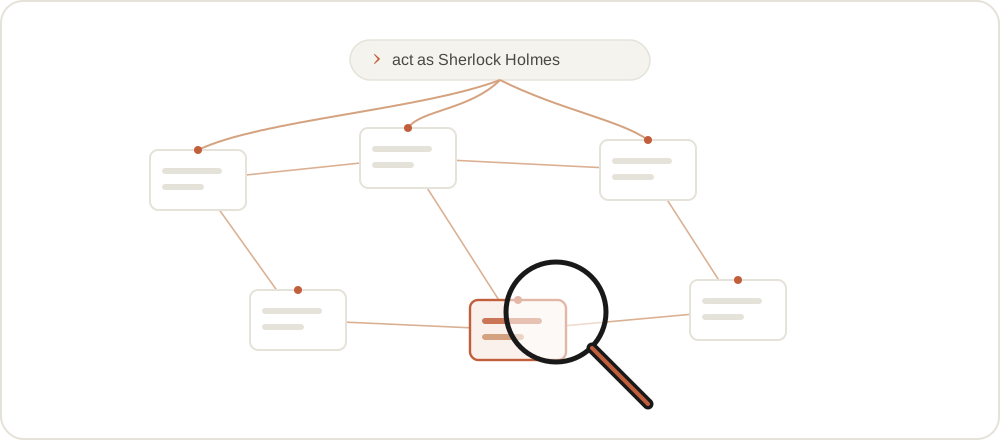
So you tell your assistant to take on the persona of Sherlock Holmes. It's an instruction so simple, and yet so powerful. Everyone knows who Sherlock Holmes is. Everyone knows the kind of mind he has — the way he delves into a problem, builds theories, and chases loose ends long after everyone else has settled on an answer. You don't have to describe any of that. You just have to name him.
You don't describe the behaviour. You name the character — and the behaviour comes with it.
Better still, rather than feeding those instructions in every single time, you can simply remind your assistant to stay in character and carry out the work that way.
Build your own cast
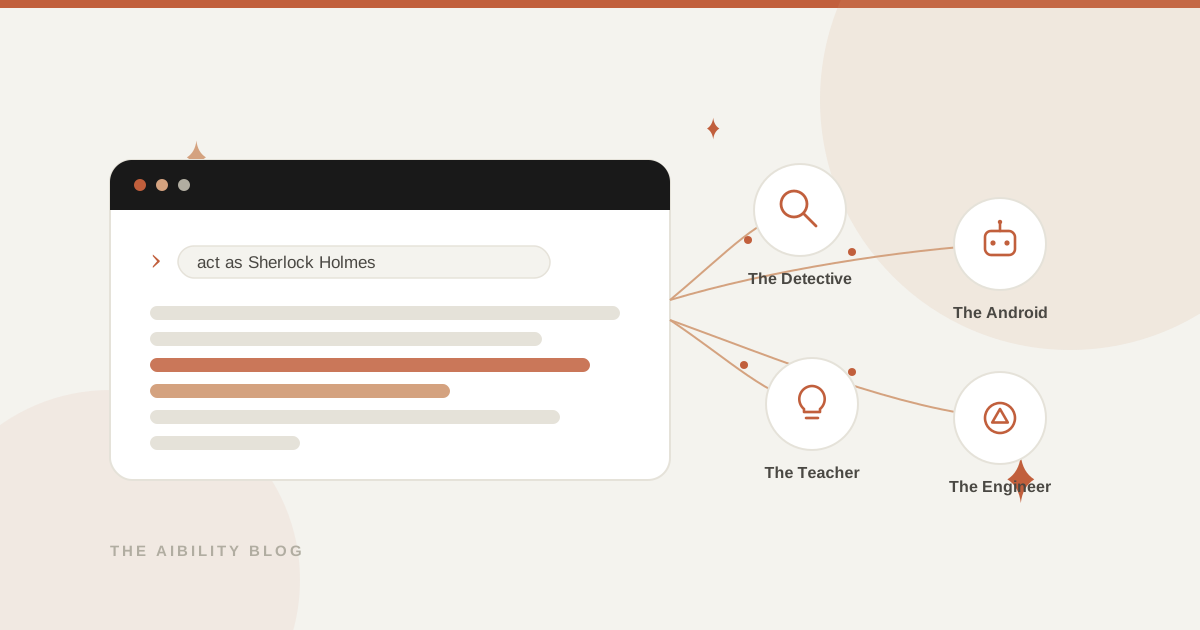
Sherlock is only the start. A few other characters I keep coming back to, each brilliant for a different kind of job:
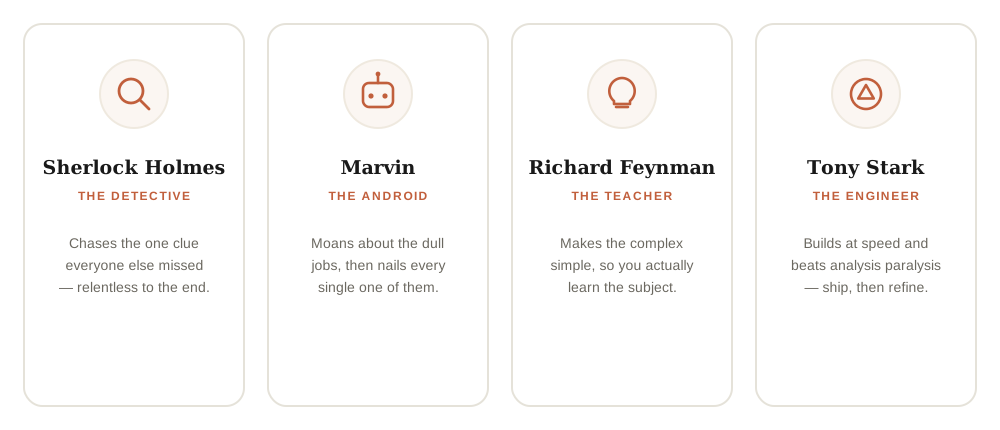
Marvin the Paranoid Android, from The Hitchhiker's Guide to the Galaxy — who grumbles endlessly about the boring jobs, then executes them to perfection. Richard Feynman, who explains the most complex topics in beautifully simple terms and is a genuine joy to learn from. And Tony Stark (Iron Man), who is superb at rapid engineering and blasting straight through analysis paralysis — that state where you're too afraid to start building because not every detail is nailed down yet.
So here's my challenge to you: come up with your own. Borrow the characters you love watching on screen — or, if you're feeling more creative, invent personas of your own from scratch.
Why it works
This isn't really about doing things faster, or even about looking at things differently. It's about breaking problems down in a way that helps you understand them — through personalities you already know inside out. You don't need to remember the perfect prompt. You just need to remember the character.
How we can help you
At AIbility we help you turn small ideas like this into the way you work every day — whether that's giving you the confidence to explore what AI can do for your business, or building the tooling that quietly solves your day-to-day problems for you.
If that sounds like the kind of help your team could use, book a free call.